Research for the Future

The Socioeconomic Threat facing Israel

Ensuring Israel’s future

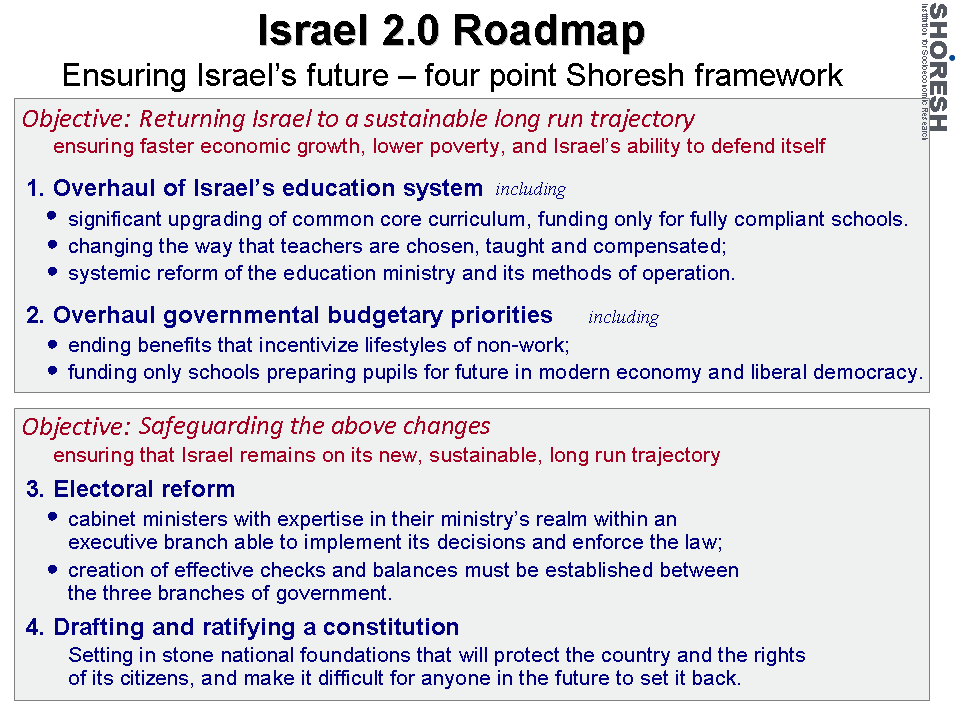
Four-point Shoresh Institution framework

Objective: Returning Israel to a sustainable long run trajectory

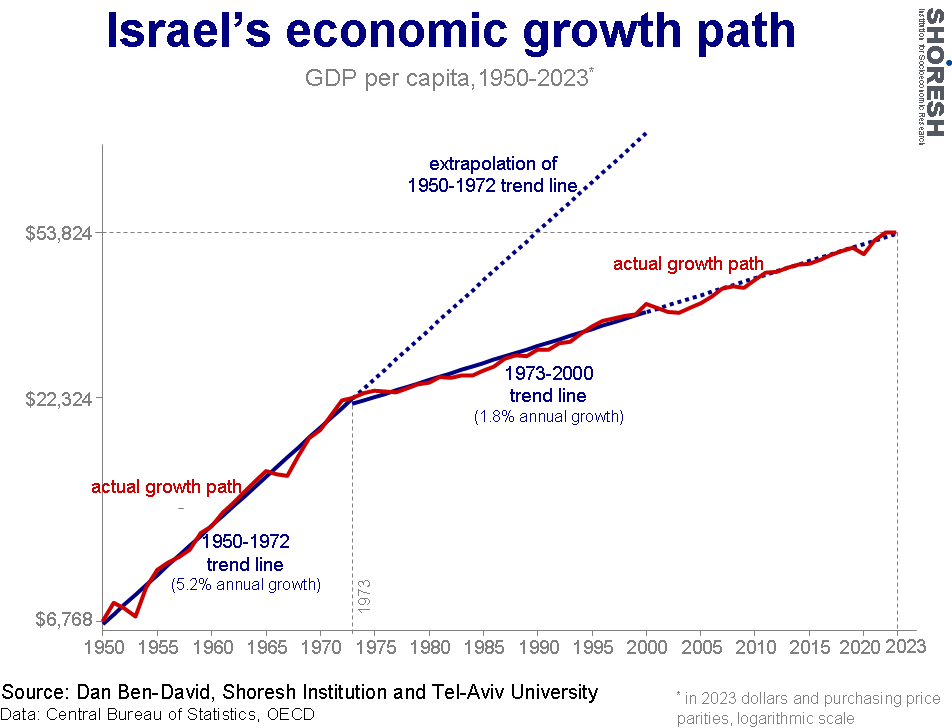
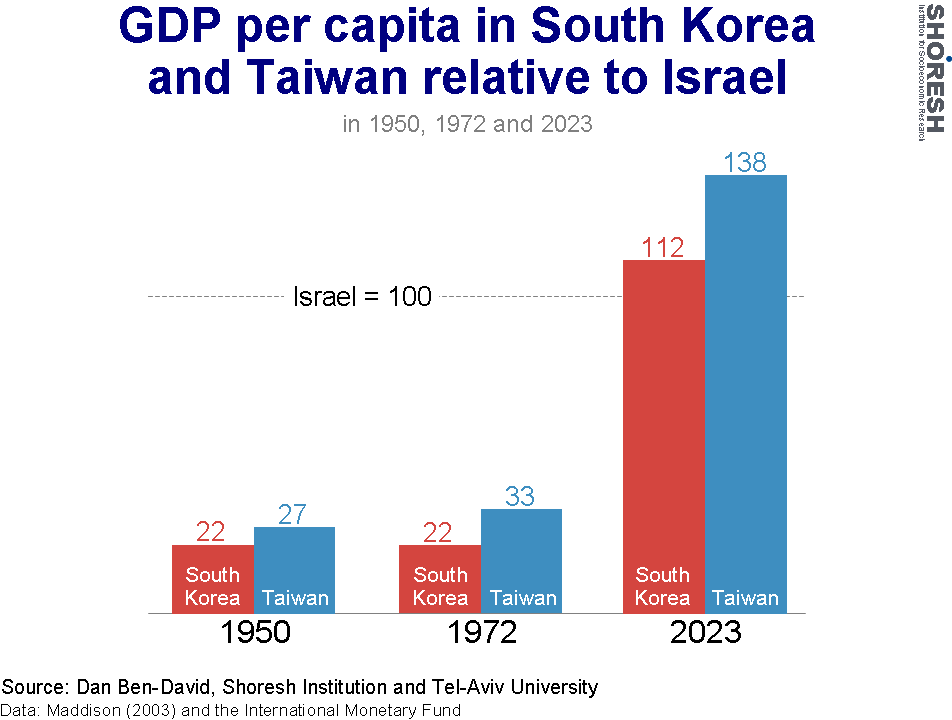
Ensuring faster economic growth, lower poverty, and Israel’s ability to defend itself

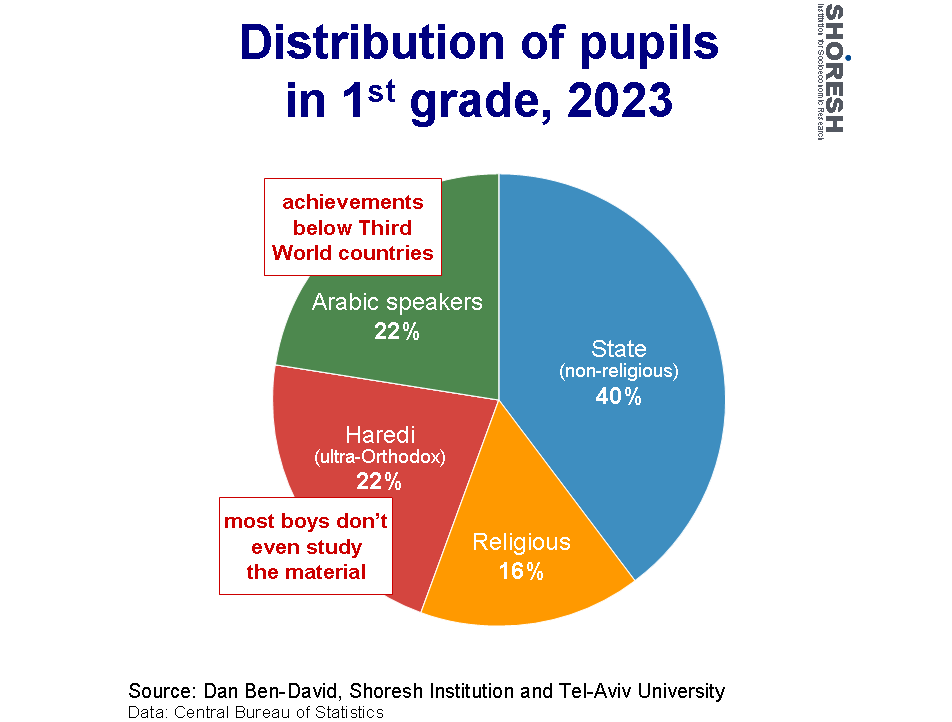
1. Overhauling the education system

Basic tenets of such an overhaul need to include:

  • A significant upgrade of common core curriculum, funding only fully compliant schools;
  • Fundamental change the way that teachers are chosen, taught and compensated;
  • Systemic reform of the education ministry and its methods of operation.
2. Overhauling governmental budgetary priorities

including:

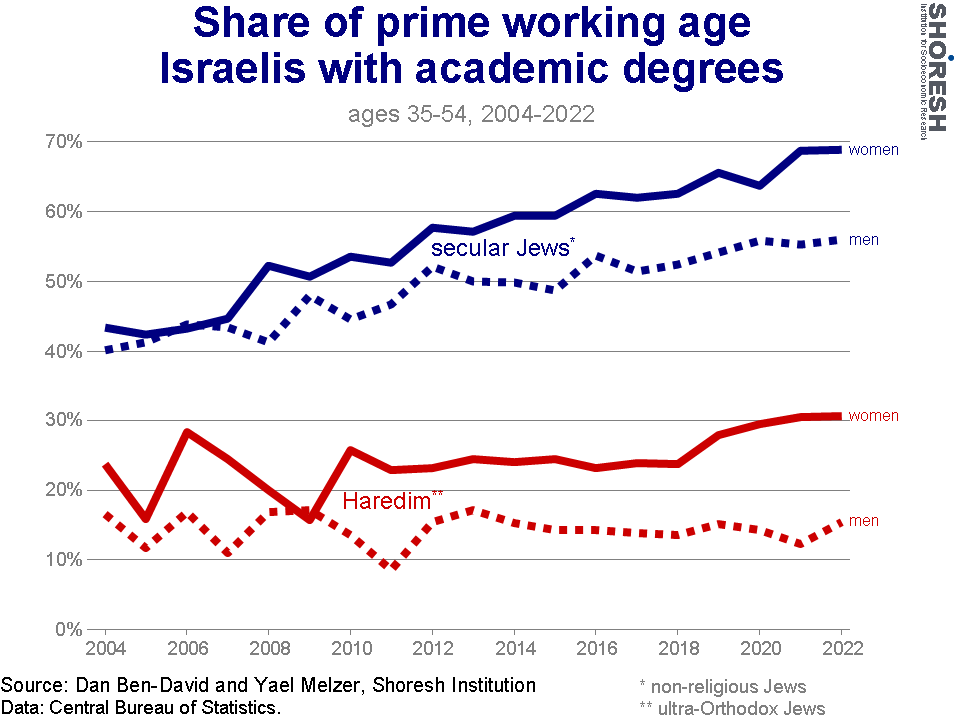
  • Discontinuation of benefits that incentivize non-work lifestyles;
  • Full budgetary transparency so that the public will know what are Israel’s actual national priorities – and among them, who the government supports and how much they receive.

Objective: Safeguarding the above changes

Ensuring faster economic growth, lower poverty, and Israel’s ability to defend itself

3. Electoral reform
  • Cabinet ministers with expertise in their ministry’s realm within an executive branch able to implement its decisions and enforce the law;
  • Creation of effective checks and balances between the three branches of government.
4. Drafting and ratifying a constitution

Setting in stone national foundations that will protect the country and the rights of its citizens, and make it difficult for anyone in the future to set it back.

Israel's moment of truth

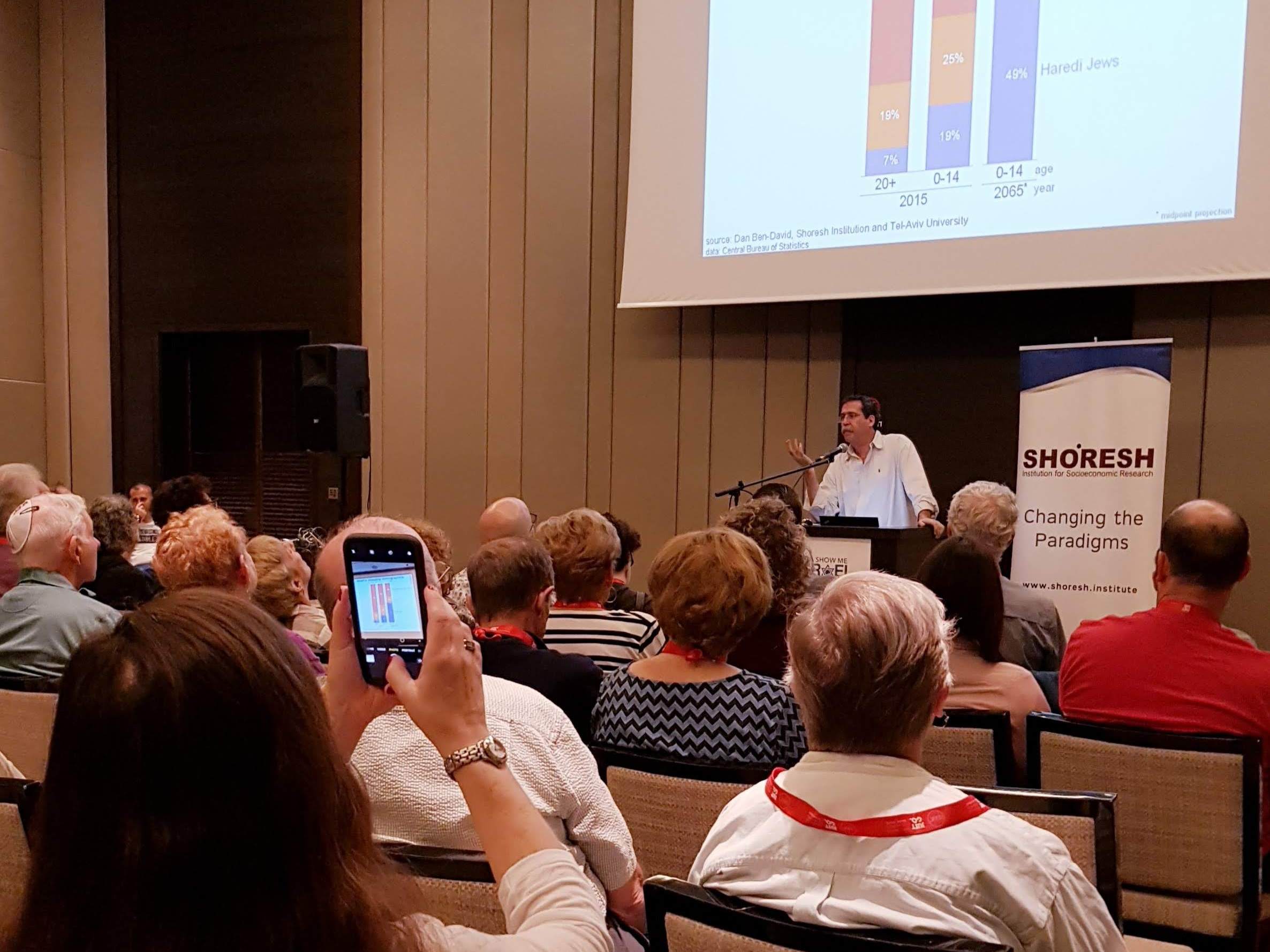
Showing root (shoresh) socioeconomic-demographic challenges to top Israeli leaders and presenting them with the four-point Shoresh Institution framework (see below) that they can unite around to ensure Israel’s future
Naftali Bennett, former Prime Minister, summer of 2024 Benny Gantz, Chairman, HaMahane HaMamlakhti Party, summer of 2024 Isaac Herzog, President of Israel, summer of 2024 Gideon Saar, Chairman, Tikvah Hadasha Party, summer of 2024
Yair Lapid, Chairman, Yesh Atid Party, Opposition Leader and former Prime Minister, summer of 2024 Yair Golan, Chairman, Democrats Party, (merger of Labor and Meretz parties), summer of 2024 Avigdor Liberman, Chairman, Yisrael Beiteinu, summer of 2024 Gadi Eisenkot and Hili Tropper, leaders in HaMahane HaMamlakhti Party, summer of 2024
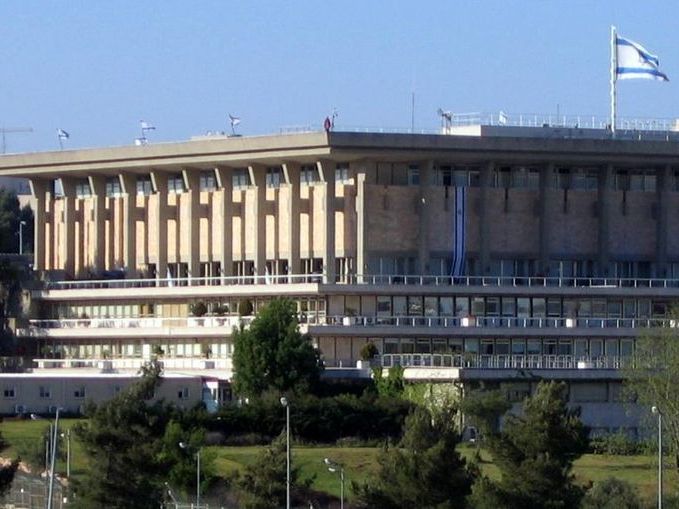
briefing in Knesset, summer of 2024
Naftali Bennett, former Prime Minister, summer of 2024 Yair Lapid, Chairman, Yesh Atid Party, Opposition Leader and former Prime Minister, summer of 2024 Benny Gantz, Chairman, HaMahane HaMamlakhti Party, summer of 2024 Yair Golan, Chairman, Democrats Party, (merger of Labor and Meretz parties), summer of 2024 Isaac Herzog, President of Israel, summer of 2024 Avigdor Liberman, Chairman, Yisrael Beiteinu, summer of 2024 Gideon Saar, Chairman, Tikvah Hadasha Party, summer of 2024 Gadi Eisenkot and Hili Tropper, leaders in HaMahane HaMamlakhti Party, summer of 2024 briefing in Knesset, summer of 2024

Naftali Bennett

former Prime Minister

summer of 2024

Benny Gantz

Chairman, HaMahane HaMamlakhti Party

summer of 2024

Isaac Herzog

President of Israel

summer of 2024

Gideon Saar

Chairman, Tikvah Hadasha Party

summer of 2024

Yair Lapid

Chairman, Yesh Atid Party

Opposition Leader and former Prime Minister

summer of 2024

Yair Golan

Chairman, Democrats Party

(merger of Labor and Meretz parties)

summer of 2024

Avigdor Liberman

Chairman, Yisrael Beiteinu

summer of 2024

Gadi Eisenkot and Hili Tropper

leaders in HaMahane HaMamlakhti Party

summer of 2024

briefing in Knesset

summer of 2024

Featured Publications

Haredi families living in Israel’s periphery live differently than those residing in the country’s center
Featured publication figure
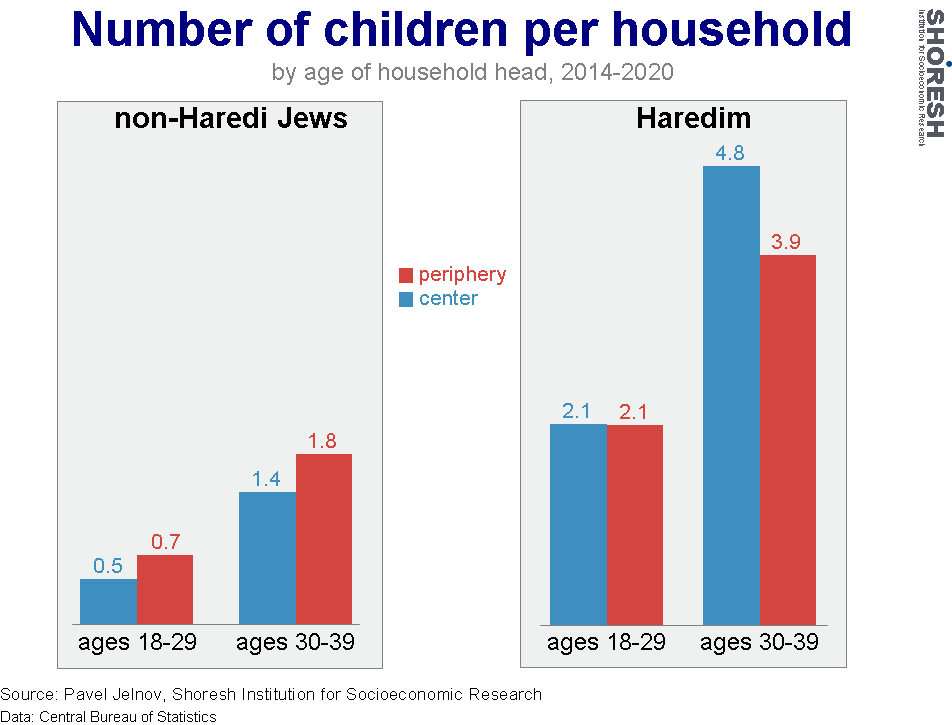
In recent years, the relocation of the Haredi (ultra-Orthodox Jewish) population from Israel’s center to the country’s periphery areas has been increasing, primarily in response to surging housing prices. This study examines how this migration is related not only to economic changes, but also to mobility patterns and family decisions, with an emphasis on the link between transportation, employment, and demography. The dispersion of the Haredi population from the center to the periphery raises the question of whether a Haredi household in the periphery differs from a Haredi household in the center in its characteristics, the composition of its income and expenditures, and its fertility rate.

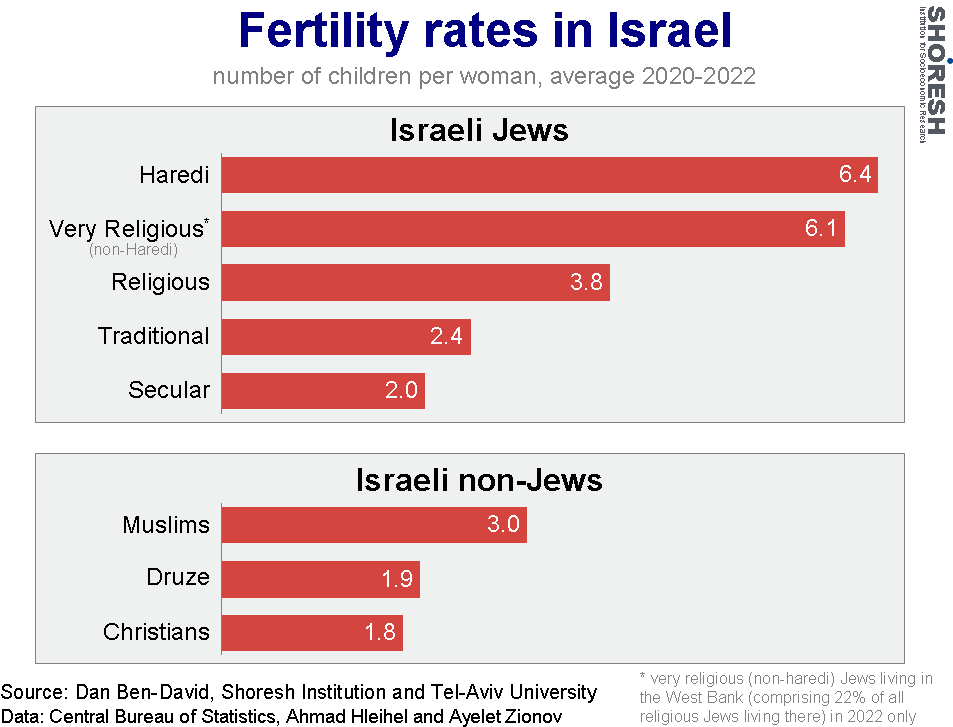
The study’s findings indicate that among Haredi families that change their area of residence – both from the center to the periphery and from the periphery to the center – the women are relatively more educated. It was also found that the income of young Haredi households in the periphery is lower than that of Haredi households in the center, but their housing expenditures are lower, while their transportation expenditures are higher. The average Haredi family in the periphery tends to have fewer children than the average Haredi family in the center. The fertility gap is partly related to vehicle ownership: a Haredi family with a car has fewer children than a family without a car, and in the periphery, more Haredi families own cars. In addition, an increase of 6,000 NIS in government benefits is found to be associated with one additional child in a Haredi household.

A key conclusion from this analysis is that in some respects, including fertility, the gap in various characteristics between Haredim in the periphery and the non-Haredi population is not quite as large as the one between Haredim in the centers and the general non-Haredi population.

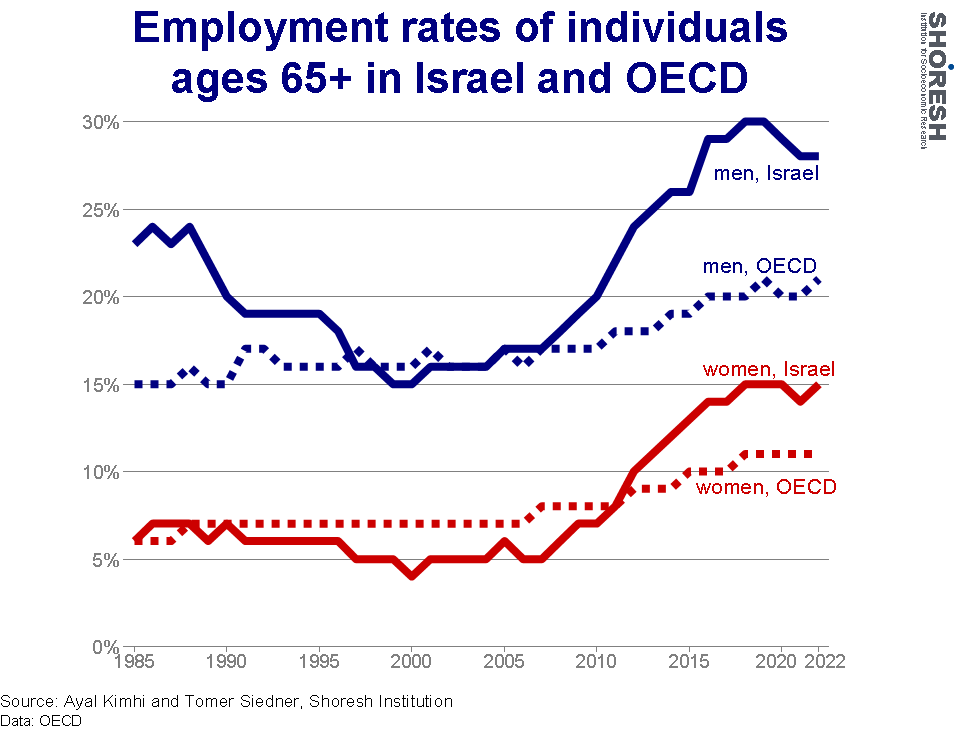
More Older Israelis are Working – But Deepening Economic Inequality in the Golden Years
Featured publication figure

Gaps in the golden years: employment and income trends in Israel

Ayal Kimhi and Tomer Siedner
December 2025
Life expectancy in Israel has risen significantly in recent decades. As older adults rely on their limited savings, this process – despite its positive aspects – may lead to a decline in the average standard of living of the older population. In addition, the expected increase in the share of older adults in Israel’s total population is likely to strain the support systems that serve them. That said, over the last decade and a half, employment rates of individuals aged 65 and over have increased, as have their incomes. At the same time, since the increase in employment has been concentrated among the relatively strong populations, gaps between population groups within the older population have widened.

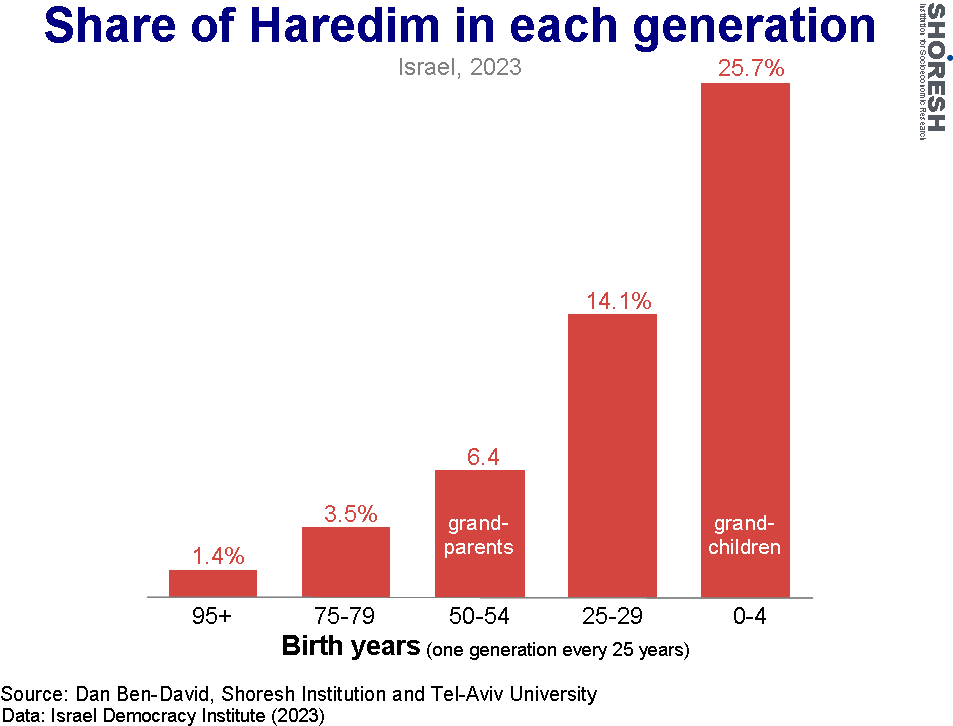
In light of these changes, support systems for the older population must be adjusted to enable better coping with demographic changes and with overall trends in the employment and income of older citizens. In particular, it is necessary to assist the weaker population groups, who rely more on welfare systems and less on labor income, in reducing the gap between them and other groups. The demographic growth of the Haredi (ultra-Orthodox) population, which at present does not fully integrate into the labor market, is particularly challenging, since it is expected to substantially contribute to an increase in income gaps among the older population in the future, making it more difficult for welfare systems to cope with these gaps.

Featured Video

Israel’s Moment of Truth

Prof. Dan Ben-David
December 2024

For more on Israel’s internal root (shoresh) existential challenges, read our publications, watch our videos – and help spread the word.

Want to be in the know?
Subscribe to our newsletter and stay up to date
Please select your preferred language for receiving updates:

Error

Missing input fields

Please try again, or write to: info@shoresh.institute


Thank you for subscribing

To ensure receipt of email from Shoresh, please add outreach@shoresh.institute to your “contacts”. If you do not receive Shoresh communications, these may be going to your spam folder. This may be corrected by unblocking mail sent from Shoresh Institution in your email settings.


Error

Subscribe attempt failed.

Please try again, or write to: info@shoresh.institute